

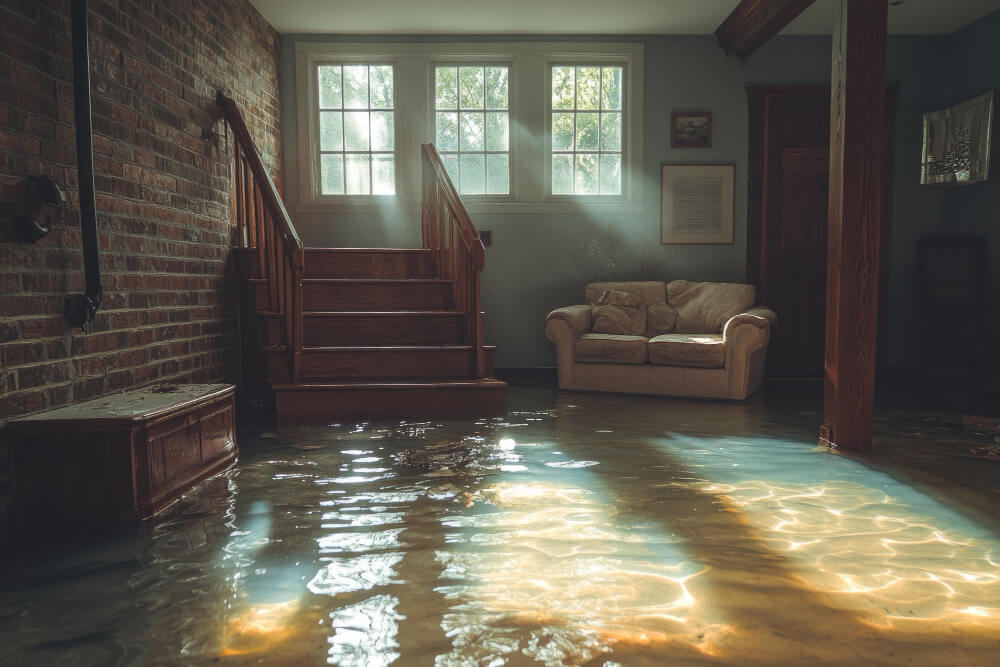
How Flood Insurance Defines a Basement
Under flood insurance rules, a basement is any area of a structure with a floor below ground level on all sides. This includes partially below-grade spaces such as split-level lower floors or sunken living areas. Even if a basement is finished or used as a living space, insurers still treat it as a basement under policy terms.
This classification matters because flood insurance coverage applies differently to basement areas compared to above-ground rooms. The structure may receive partial protection, while many contents inside remain excluded.
What Flood Insurance Covers in Basements
Flood insurance focuses on protecting structural elements and essential systems that support basic home function. Coverage applies mainly when equipment is installed, connected, and actively used.
Covered basement items often include:
- Sump pumps and water removal systems
- Electrical panels, circuit breakers, and wiring connections
- Water heaters and HVAC systems
- Oil tanks, gas tanks, and fuel storage systems
- Foundation walls and structural components
- Staircases, elevators, and permanent access structures
- Installed insulation and unfinished drywall
What Is Not Covered in Basement Flooding
Many homeowners are surprised to learn that personal belongings and finished basement improvements are generally excluded. Flood insurance coverage focuses on structural necessity rather than lifestyle or decorative value.
Common exclusions include:
- Furniture, televisions, computers, and stored electronics
- Clothing, books, and personal belongings stored in boxes
- Finished flooring, carpeting, and painted walls
- Basement bars, gyms, or entertainment rooms
- Decorative fixtures and non-essential upgrades
- Items not connected to a power source
Why Basement Coverage Is Limited
Basement flooding often occurs due to ground-level water entry. This type of damage differs from other forms of water intrusion that may be covered under homeowners insurance. Flood insurance distinguishes between natural flooding and internal water events, which affects claim approval.
The reasoning behind limited basement coverage is tied to risk exposure. Basements are more likely to flood during storms, river overflow, or surface runoff, which increases loss frequency. As a result, insurers restrict coverage for items most likely to be submerged or damaged in repeated flood events.
Common Sources of Basement Flooding
Basement flooding can happen in several ways, especially during severe weather. Typical causes include:
- Heavy rainfall overwhelming drainage systems
- River or lake overflow entering lower ground areas
- Storm surge pushing water inland during hurricanes
- Rapid snowmelt saturating soil and increasing pressure
- Groundwater rising through foundation cracks
Each scenario falls under flood insurance definitions when multiple properties or land areas are affected by water movement. However, internal plumbing failures may fall under different insurance rules.
How Claims Are Evaluated in Basement Floods
Insurance adjusters review several factors when assessing basement flood claims. The primary consideration is how water entered the property. If water originates from natural flooding and enters through ground level, flood insurance may apply to eligible structural items.
Adjusters also examine:
- Installation status of equipment
- Connection to power or utility systems
- Location of damaged items within the basement
- Proof of maintenance and condition prior to flooding
Flood Insurance Cost and Basement Risk
Flood insurance cost often reflects property risk, including basement exposure. Homes in high-risk flood zones or low-lying areas may face higher premiums due to increased likelihood of basement flooding.
Properties with finished basements or valuable stored contents may also experience higher perceived risk, even though contents coverage remains limited. Elevation level, drainage quality, and regional weather patterns all influence pricing and underwriting decisions.
How Homeowners Can Reduce Basement Risk
While coverage has limits, homeowners can take steps to reduce potential damage. Preventive actions include:
- Installing sump pumps with backup power systems
- Sealing foundation cracks and wall joints
- Improving exterior drainage around the property
- Elevating utilities above ground level when possible
- Avoiding storage of valuable items in basement spaces
Speak With Insurance Guidance That Fits Real Risk
Understanding does flood insurance cover basements becomes clearer when reviewing how policies classify structural systems, stored belongings, and flood sources. At RetireMax Insurance, we help homeowners review basement risk, explain coverage limitations in simple terms, and identify gaps that may affect protection.
Call us today to speak with a team that helps you understand your coverage with confidence.
FAQs
Does flood insurance cover basement flooding completely?
No. Only certain structural and essential systems are covered, while personal belongings are generally excluded.
Are finished basements covered under flood insurance?
Finished areas such as flooring, walls, and furniture are typically not covered under flood insurance policies.
What basement items are usually covered?
Installed systems like sump pumps, water heaters, electrical panels, and HVAC units may be covered if properly connected.