

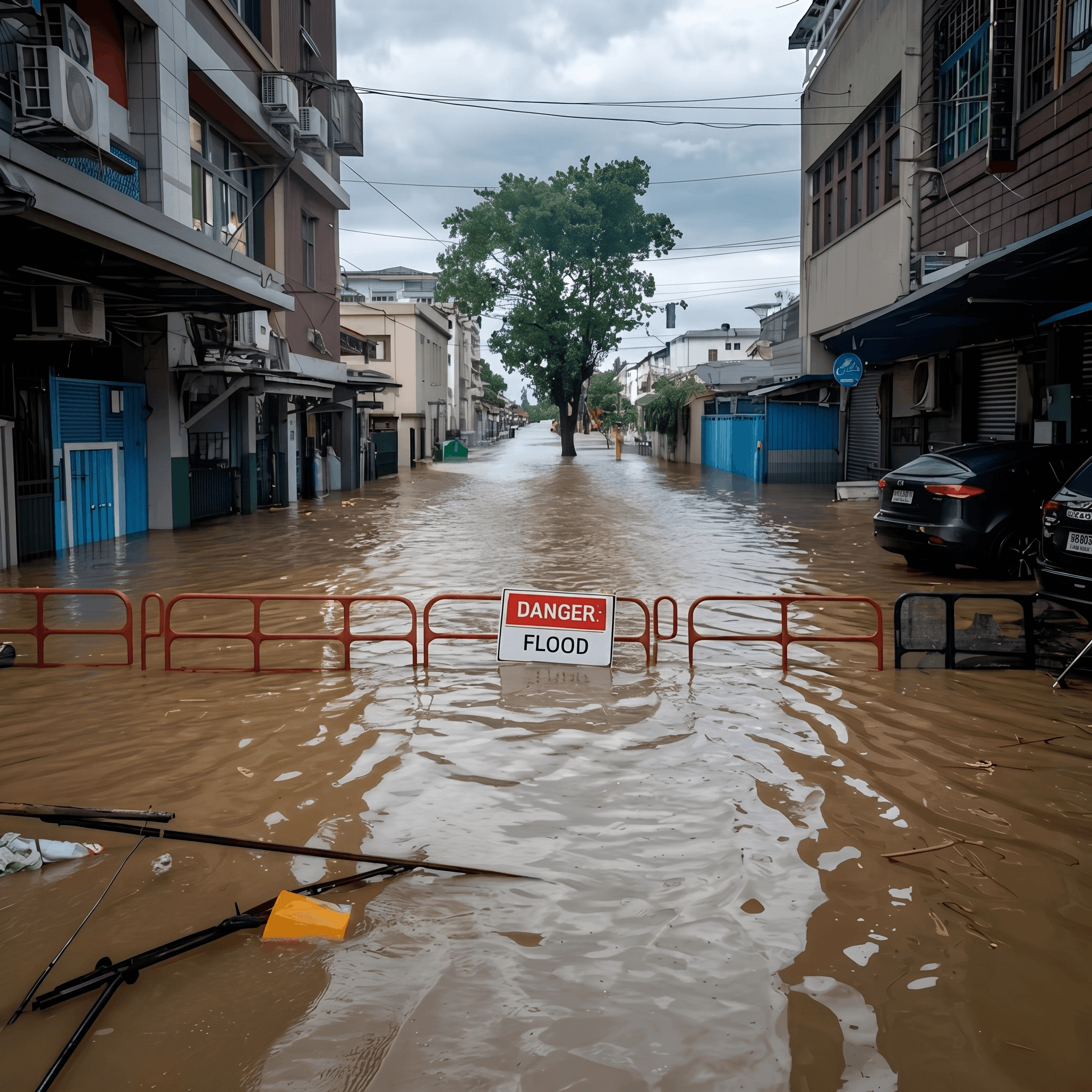
What Counts as Flood Damage
Flood damage refers to a broad and temporary overflow of water affecting two or more properties or large land areas. Under standard definitions used in flood insurance, water must come from natural sources such as rising rivers, storm surges, or heavy surface runoff.
Common examples include:
- Overflow of inland or tidal waters affecting multiple homes
- Surface water accumulation after intense rainfall
- Mudflow triggered by saturated ground conditions
- Coastal water movement caused by storms or erosion
Flood events often impact entire neighborhoods. This shared impact is one reason flood insurance coverage is separate from standard homeowners policies.
What Counts as Water Damage
Water damage typically originates inside a structure or affects a single property without external flooding across an area. Homeowners insurance often covers these situations, depending on policy terms and maintenance conditions.
Common examples include:
- Roof leaks caused by heavy rain entering a damaged structure
- Burst pipes that release water inside walls or floors
- Overflowing toilets or appliances
- Window breakage during storms allowing rain entry
Unlike flood events, these situations usually remain isolated to one home. This distinction plays a major role in how insurance companies evaluate claims and determine payout eligibility.
Key Differences Between Flood and Water Damage
Insurance providers rely on cause, scale, and source of water when separating claims.
- Source of water: Flood damage comes from natural outdoor water movement, while water damage often begins inside the property.
- Number of properties affected: Flood events impact multiple properties, while water damage usually affects a single structure.
- Policy classification: Flood damage falls under flood insurance, while water damage is typically handled by homeowners insurance.
- Claim evaluation: Adjusters examine whether water entered from ground level or originated within the building.
How Insurance Companies Interpret Claims
Insurance companies use strict definitions when reviewing water-related damage. A key factor is whether the water touched the ground before entering the property. If water originates from rainfall that enters through a roof or broken window, it may be classified as water damage.
However, if the same rainfall accumulates outside and enters multiple properties through ground-level flooding, it shifts into flood damage classification. This difference often surprises homeowners during claim reviews.
Misinterpretation of policy terms is one of the most common reasons for denied claims involving flood insurance coverage disputes.
Why Coverage Differences Matter
The separation between flood and water damage determines financial responsibility after a loss event. Standard homeowners insurance typically excludes flood-related losses. This gap leaves many homeowners dependent on separate flood insurance policies for protection against rising water events.
Flood insurance cost varies based on location, elevation, and risk level. Homes in high-risk zones often carry higher premiums, while lower-risk areas may have reduced rates. Without proper flood insurance coverage, homeowners may face full repair costs after a major storm or river overflow event.
Common Misunderstandings After Storm Events
Many homeowners assume all water damage is treated equally. However, claims often depend on how the event is classified.
Misunderstandings include:
- Assuming rain-related roof leaks are flood damage
- Expecting homeowners insurance to cover storm surge flooding
- Believing any storm-related water qualifies for reimbursement
- Overlooking policy exclusions tied to natural water movement
How Homeowners Can Prepare
Preparation begins with reviewing policy language before damage occurs. Understanding exclusions related to flood insurance helps avoid financial surprises. Homeowners can also evaluate property risks based on location, drainage, and elevation.
Regular maintenance also plays a role. Leaky roofs, faulty plumbing, and poor sealing around windows can increase exposure to water damage claims that fall outside flood insurance coverage.
Speak With Insurance Guidance That Fits Real Risk
Flood damage vs. water damage often determines how claims are classified after severe weather or internal failures. At RetireMax Insurance, we review policy details with homeowners in clear terms, explain how coverage differences apply to real situations, and help identify gaps that may affect protection.
With more than 30 years of experience and no broker fees, our focus remains on straightforward communication and practical guidance for families managing flood insurance decisions.
Call us today to review your insurance options and get answers tailored to your property and risk needs.
FAQs
Is flood damage the same as water damage?
No. Flood damage comes from natural water events affecting multiple properties, while water damage usually originates inside a home.
Does homeowners insurance cover flood damage?
Most homeowners policies exclude flood-related losses, which is why separate flood insurance coverage is often required.
Why do insurance claims get denied after storms?
Denials often happen when damage is classified as flood-related instead of covered water damage under a policy.